


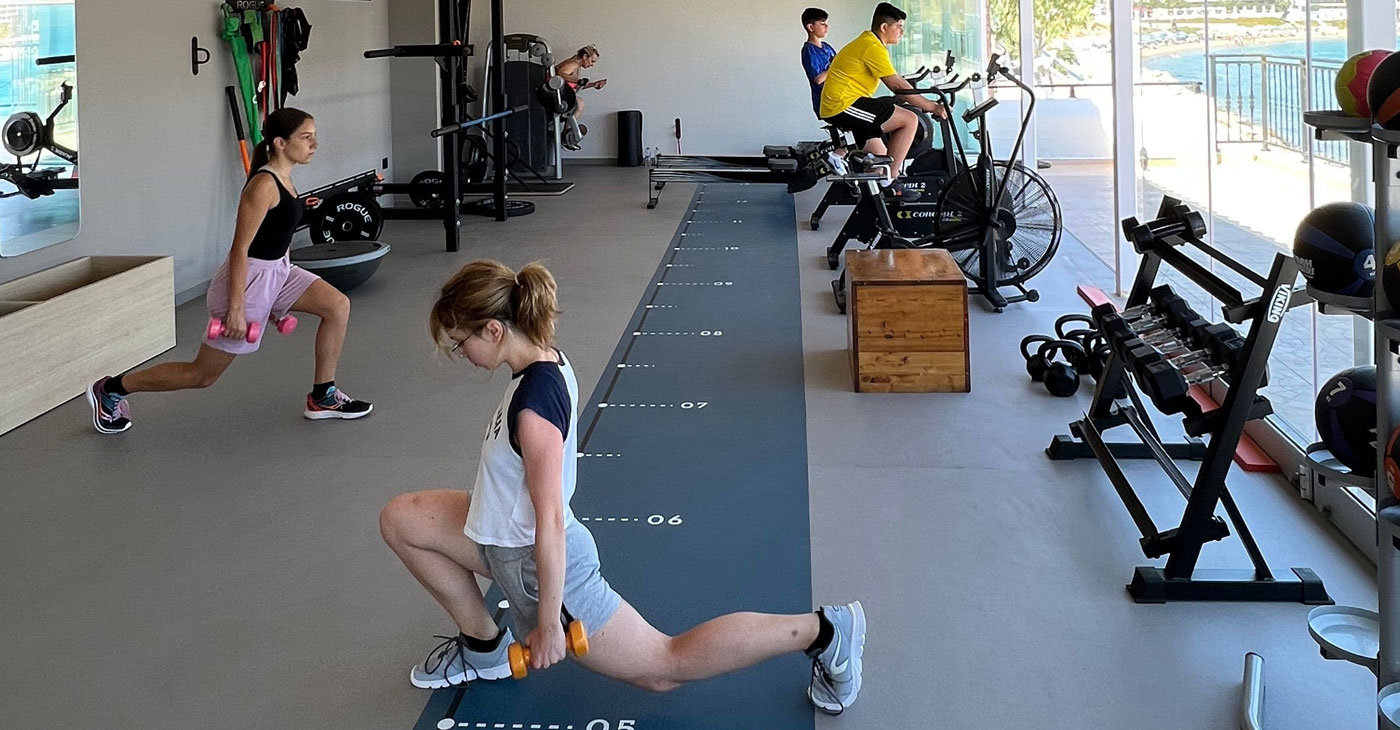
10 Ιου 2025 | Children and Strength Training
For many years, there have been numerous beliefs about whether children should use weights in their training programs. In the following article, we will examine what truly applies.
Perceptions – Myths and Truths
For several years, especially in Greece, there has been a prevailing belief that children/young athletes should not use weights in the gym during strength training. According to this view, the reasons are the following: weights may negatively affect a child’s physical development, cause problems in the lumbar spine, and potentially lead to fractures, injuries, or other undesirable outcomes. It has also been suggested that the only resistance children should use is their own body weight, such as squats, pull-ups, etc.
What Actually Applies
Let us now examine, based on scientific literature, what truly applies and how parents should guide young athletes.
According to research and scientific evidence, there is absolutely no reason to keep children away from strength training with weights. On the contrary, weight training offers the following benefits for young athletes.
Benefits
Adding weights to a young athlete’s program can increase muscular endurance and muscle hypertrophy, which in turn contributes to protecting the musculoskeletal system. This also leads to increased bone density. Additionally, cardiorespiratory capacity is improved, as stronger muscles require less oxygen to perform a given activity. As a result, children fatigue less during running or play, as they expend less energy. Furthermore, stronger muscles have better blood flow and more mitochondria, allowing them to perform longer without fatigue.
Additional benefits can also be observed in the blood profile of young athletes who include weight training in their programs. Specifically, reductions in triglycerides and improvements in the ratio of good to bad cholesterol have been observed. Insulin sensitivity also increases, leading to better regulation of blood glucose levels. This contributes to the prevention and management of diabetes.
Weight training also plays a significant role in injury prevention, as stronger tendons and muscles become more resilient to loads and sudden forces. Young athletes develop better neuromuscular control, improving body position and stability. Musculoskeletal injuries can be reduced by up to 42%.
Finally, one of the most important benefits of this type of exercise is the improvement of children’s psychological well-being. Scientific evidence shows a reduction in anxiety and depression through the release of endorphins and serotonin (happy hormones). Additionally, exercise reduces cortisol levels (the stress hormone). All of the above contribute to improved self-confidence, better self-esteem, and stronger social connections (teams, friends, etc.).
The Importance of a Specialist
It is reasonable to wonder how often children should train and who is responsible for guiding them with an appropriate strength training program. This is an excellent question. While many programs and techniques can be found online, they carry a risk of injury, as each athlete is different and has unique needs. Therefore, it is advisable to consult certified and experienced professionals in sports.
Such professionals may include physiotherapists or strength and conditioning coaches with experience. They can guide proper technique, frequency, and load appropriate for each athlete. Additionally, a coach can recognize when an athlete needs rest and help prevent potential burnout.
At Our Center – Physiovita Sports Clinic
We have specialized staff: physiotherapists and sports physiotherapists with expertise in sports and developmental ages. We design personalized programs for young athletes, aiming to improve strength, aerobic capacity, and—above all—injury prevention. All training interventions are based on scientific principles, applied safely, and utilize appropriate equipment, with respect for the needs and characteristics of each child or adolescent.
In Summary
Strength training can significantly benefit young athletes by improving strength, endurance, and reducing the risk of injuries. It is most effective when combined with aerobic training, flexibility exercises, and the child’s sport. The key is proper guidance and balance.
Vasileios G. Vasilarakis
Physiotherapist, MSc